.webp)
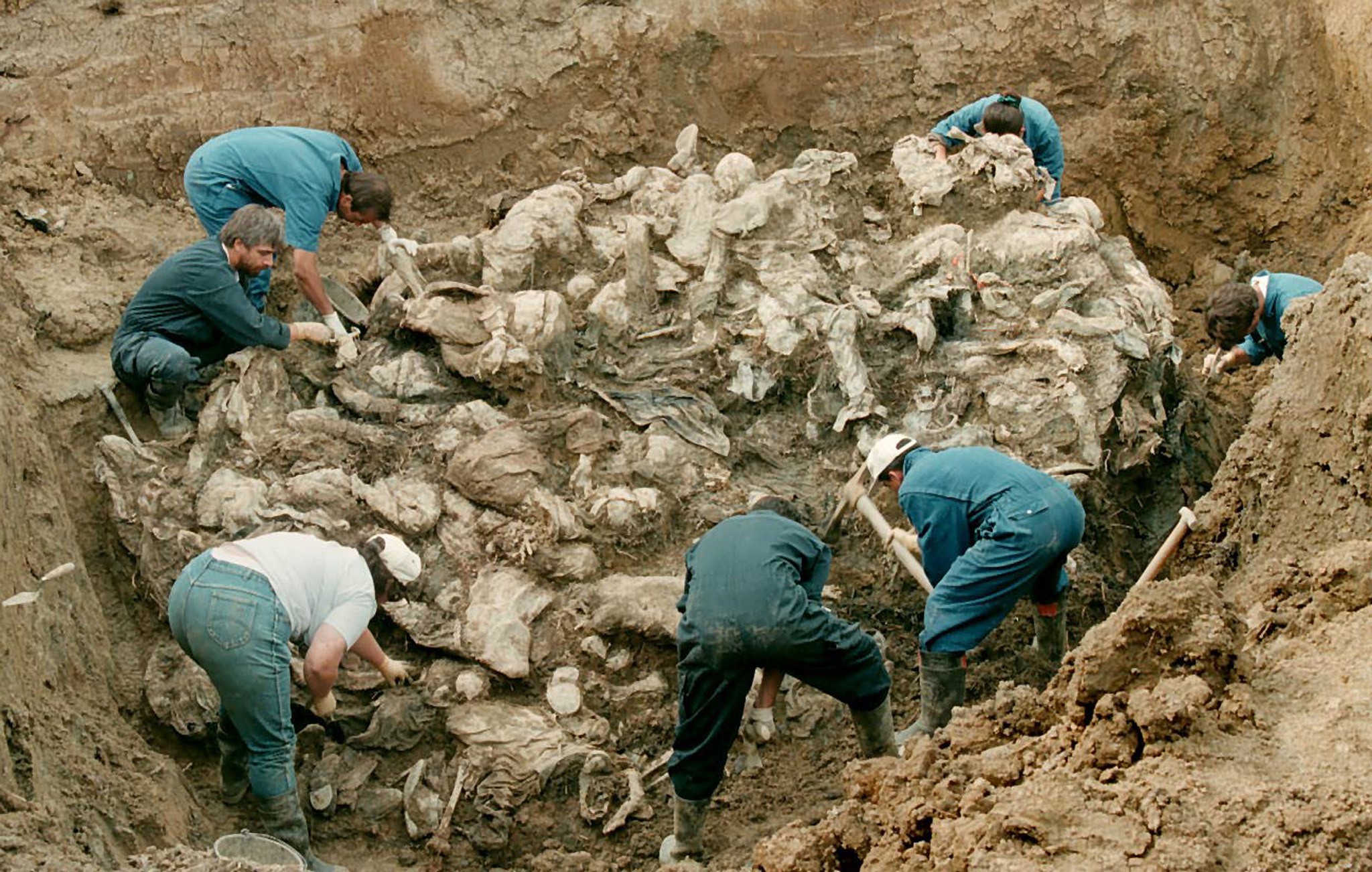
The genocide in Bosnia, and in Srebrenica in particular, produced a very strong denialist current among elements of the political left. It is, of course, not the case that it was just members of the left whose response to the genocide was problematic; the Conservative government in Britain – a right-wing government – actively collaborated in it, and there were members of the far-right who supported the Serb extremists. It’s also not true that everyone on the left supported the genocide or apologised for it; there were many people on the left who also defended Bosnia and other victims of the genocide and the Serb-extremist aggression. Nevertheless, genocide denial in a radical leftwing form was a particularly strong phenomenon. So there was a correlation between radical left-wing views and genocide denialism. Many of the biggest names in the radical left, in Britain, the US and elsewhere, supported the Serb perpetrators of genocide and crimes against humanity, or at least apologised for them or tried to minimise their culpability, presenting them as victims of some sort of hostile Western imperialist conspiracy or aggression. Such figures and publications included Noam Chomsky, John Pilger, the former Labour leader Jeremy Corbyn, Tony Benn, Diane Abbott, The Nation magazine in the US, the Socialist Workers Party and Living Marxism in the UK. Also, many or most of the most prominent denialist tracts seeking to defend the regime of Slobodan Milošević and deny its crimes, and the crimes of Karadžić, Mladić and other Serb-extremist perpetrators were written from a radical left-wing perspective, by authors such as Diana Johnstone, David Gibbs, Kate Hudson, Ed Herman, David Peterson, Michael Parenti and others. This article seeks to explain why radical left-wing activists or thinkers wanted to support, apologise for, deny or downplay genocide in the former Yugoslavia.
One reason was a sort of tribalist left-wing identification with the regime of Slobodan Milošević, on the grounds that it was socialist. Milošević called himself socialist; his party was the continuation of the League of Communists of Serbia. At a time when the Communist regimes had been tumbling across the whole of Eastern Europe, Milošević seemed to be one of the last upholders of that legacy. Consequently, leftists who believed in Communist dictatorship, as the vehicle for historical progress from a left-wing perspective, naturally then tended to identify with the Milošević regime.
Read articleSources
- Turčalo, S. & Karčić, H. (Eds.). (2021). Bosnian Genocide Denial and Triumphalism: Origins, Impact and Prevention. Faculty of Political Science, University of Sarajevo, in cooperation with Srebrenica Memorial Center and Institute for Islamic Tradition of Bosniaks.